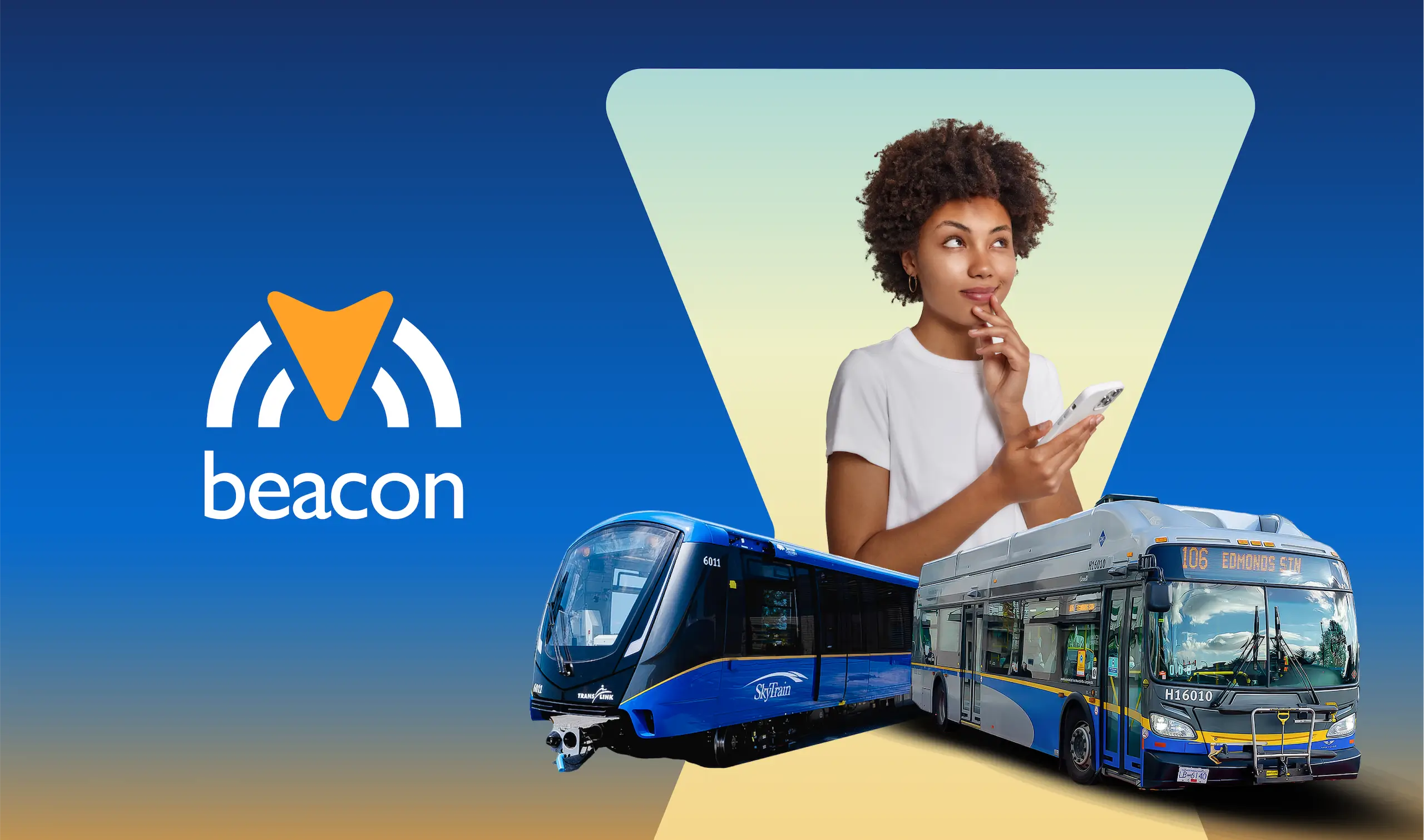
The Problem
The Problem
In major urban centers, transit riders frequently encounter delays, overcrowding, and unexpected service changes with little to no communication from official transit authorities. These information gaps create persistent frustration, leading to missed connections and an overall unreliable commuting experience. Riders currently lack a centralized, efficient way to report real-time observations or receive live, crowdsourced updates from others traveling on the same routes, leaving them without the critical data needed to navigate the city effectively.
Features
Features
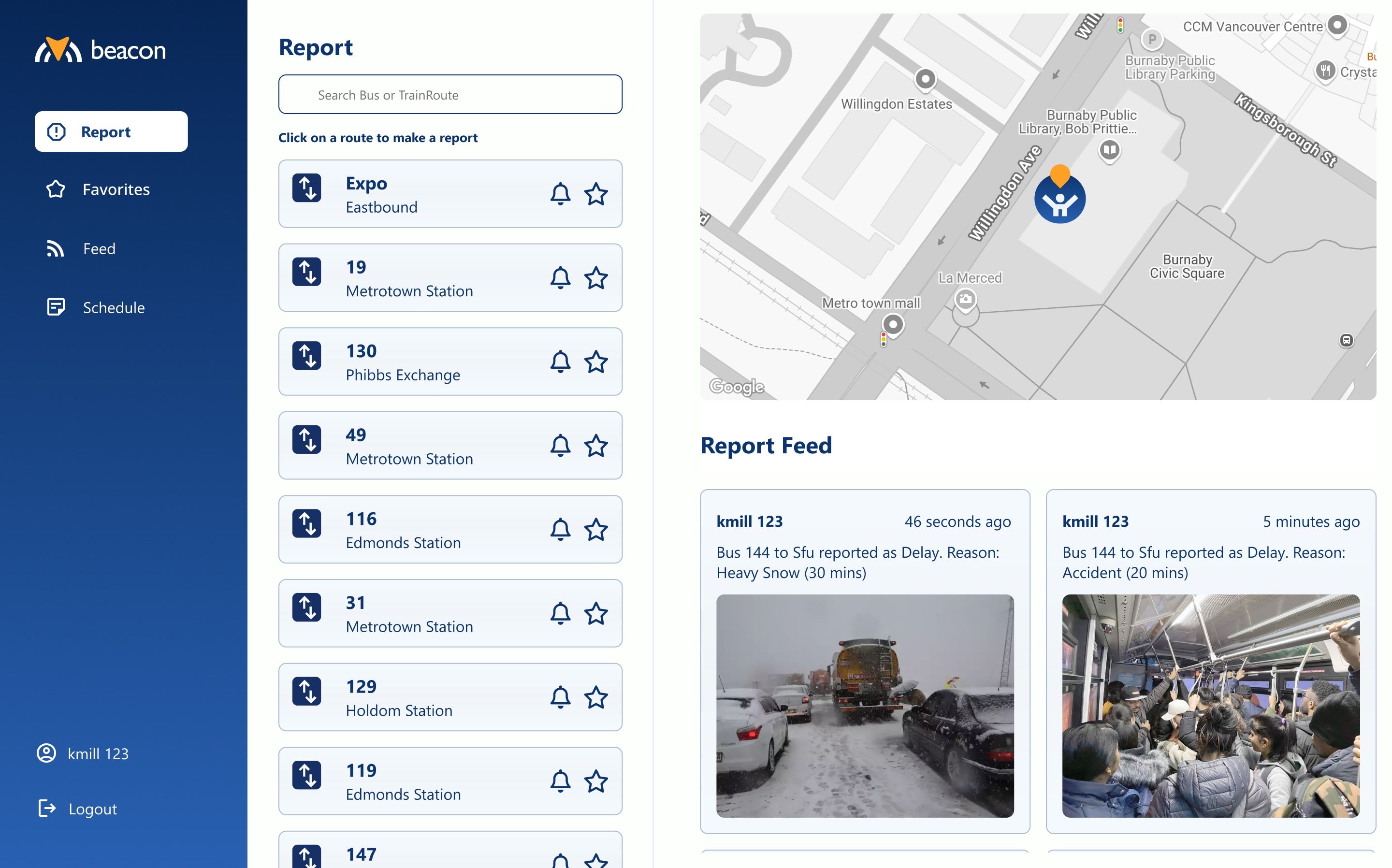
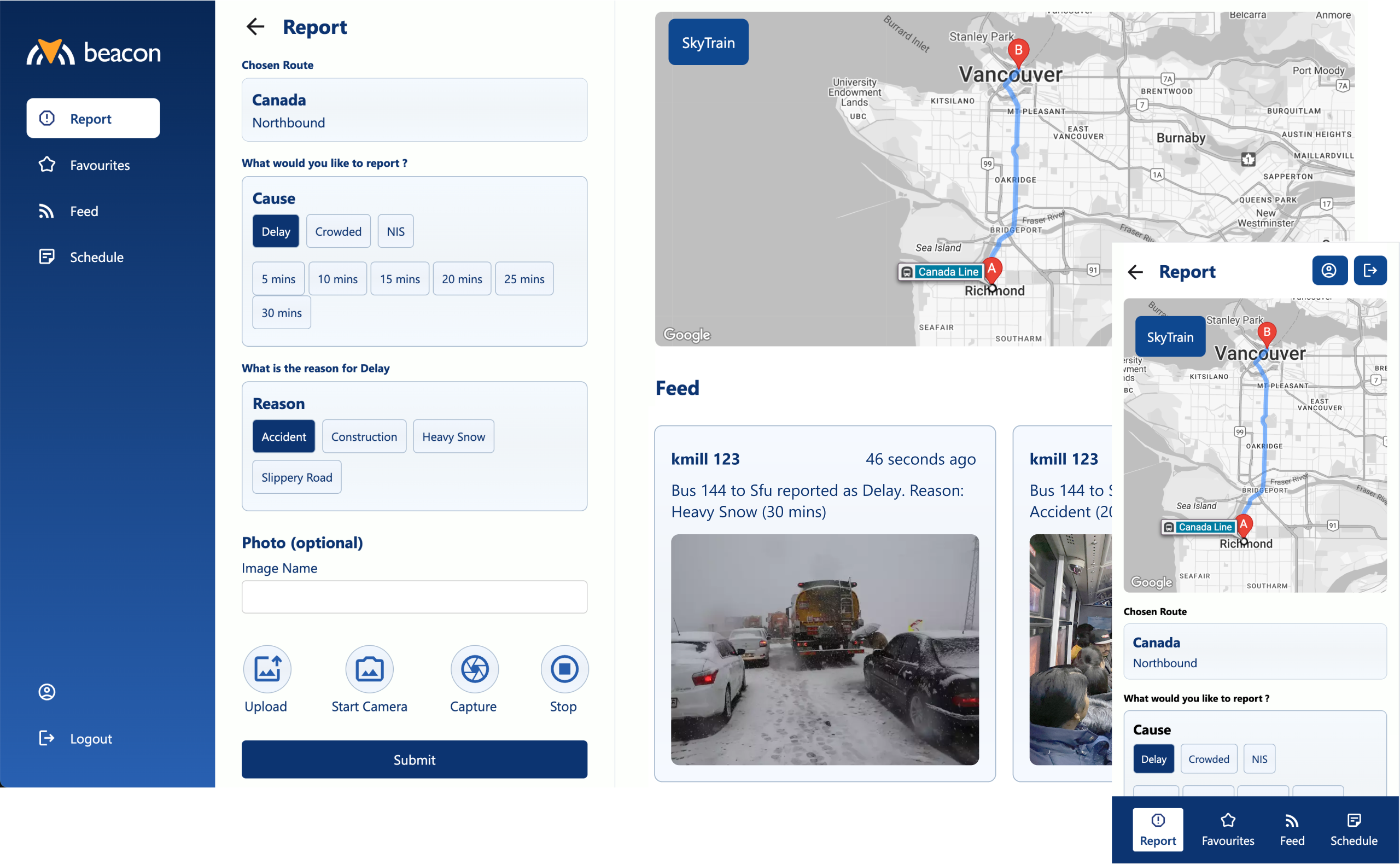
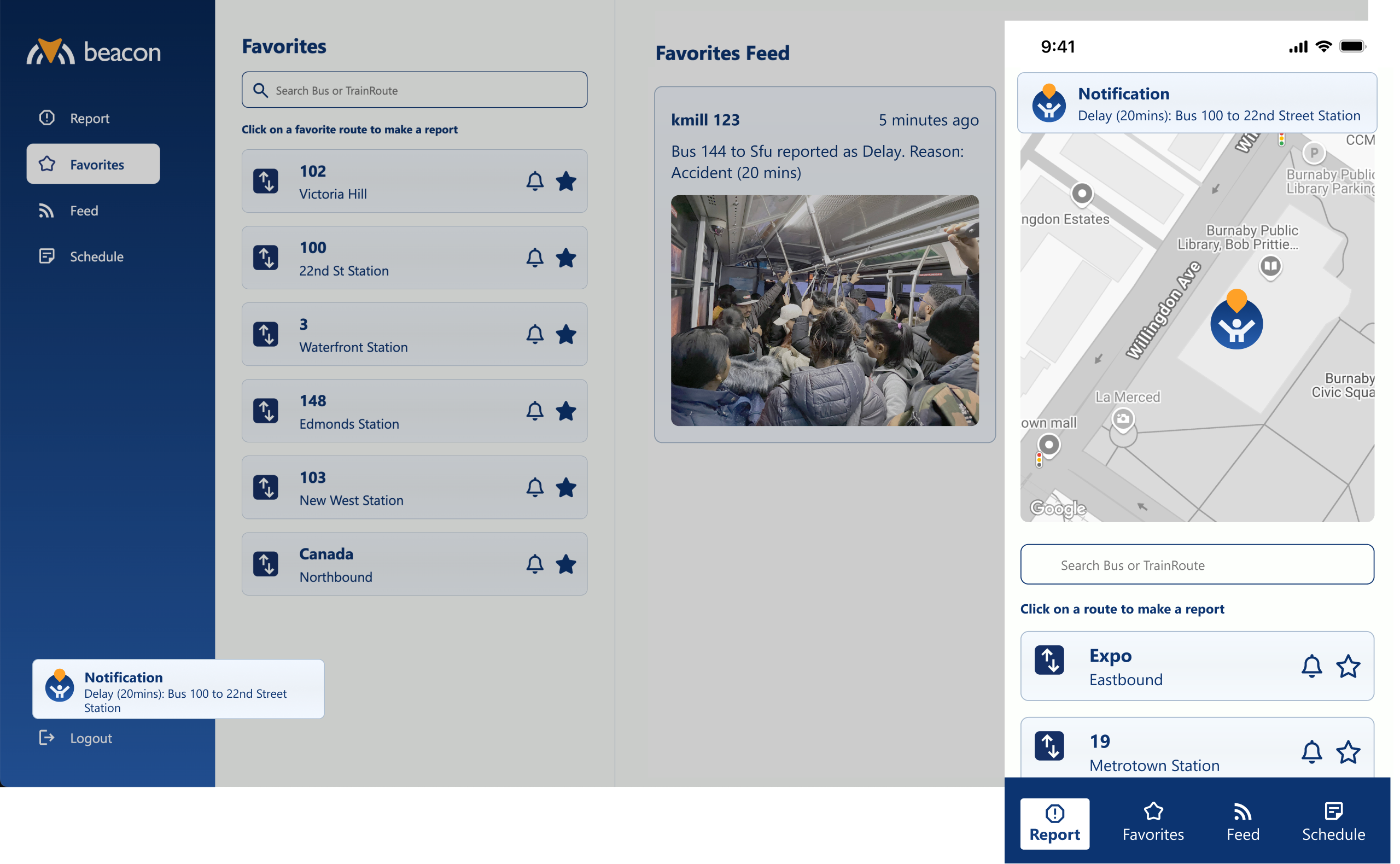
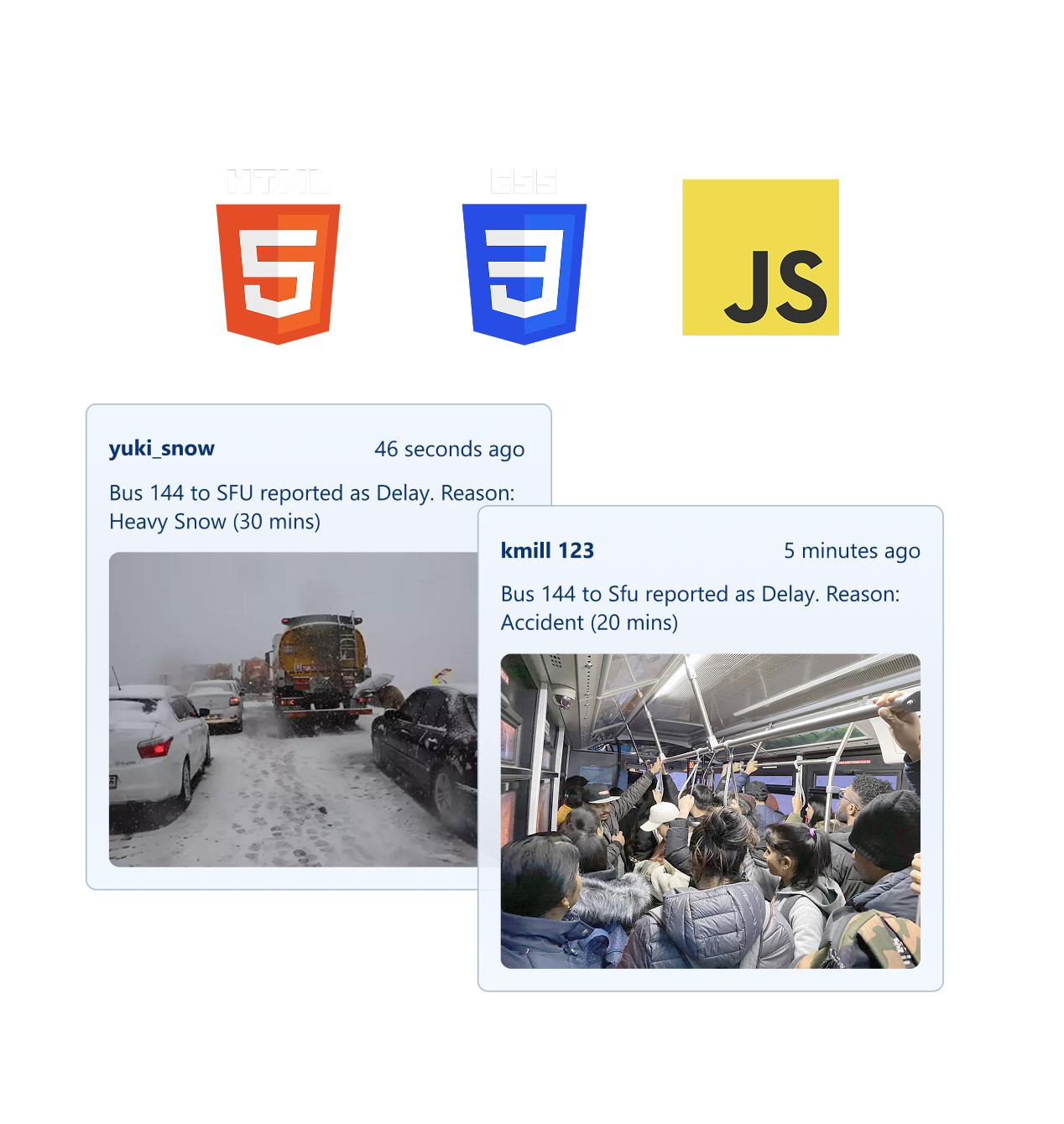
Beacon empowers users through a suite of real-time reporting tools that allow them to flag issues such as crowding, delays, or vehicles out of service with just a few taps. These reports are instantly integrated into a live community feed, which users can filter by route, time, or specific cause to gain an immediate understanding of their commute. By attaching images as evidence and receiving custom notifications based on their frequent routes, riders transform from passive commuters into an active network of sensors, providing a level of granular, live data that official transit apps often fail to capture.
Visual Identity Design
Visual Identity Design
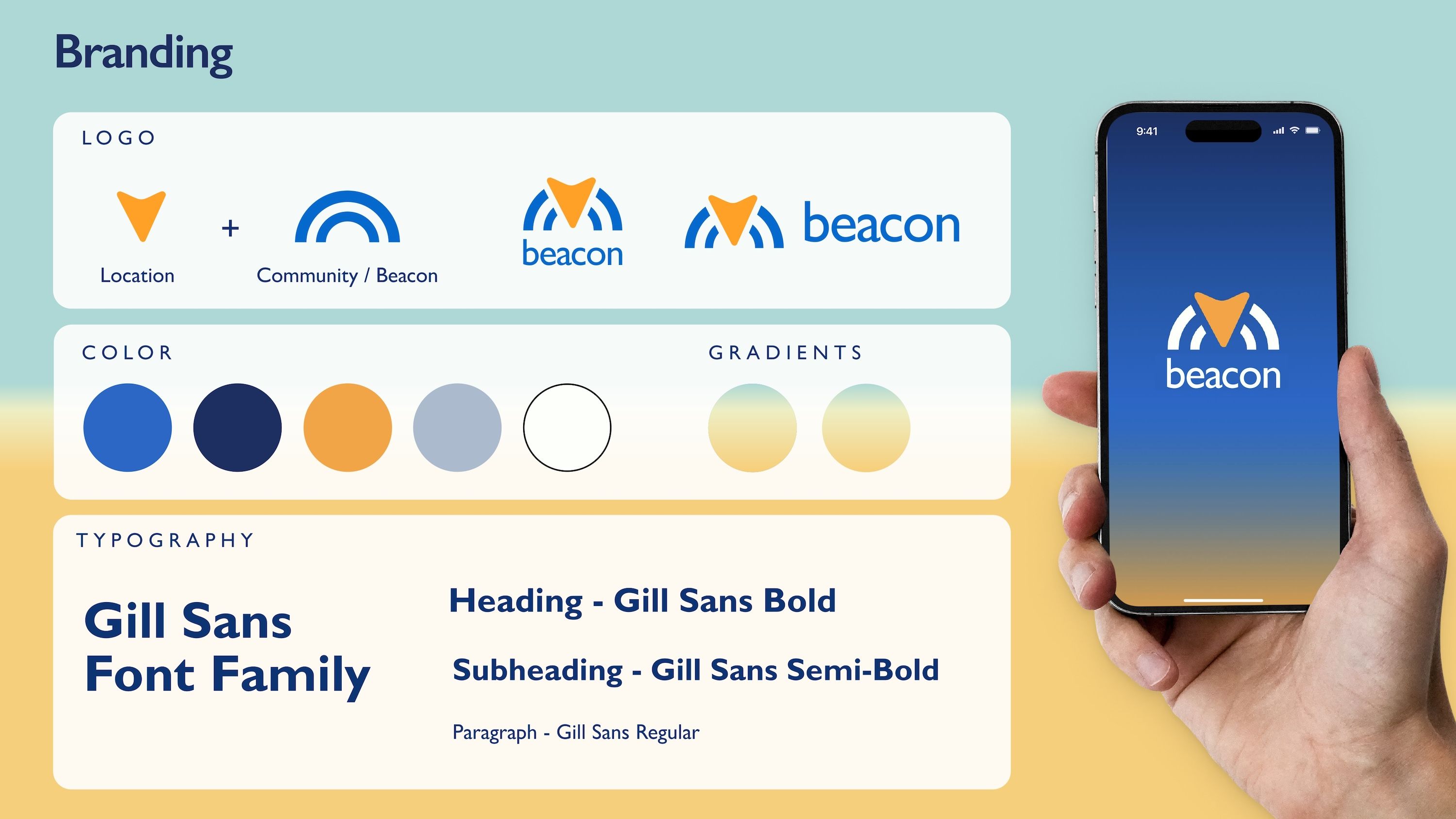
The Beacon brand identity is centered around the core pillars of trust, action, and clarity, utilizing a logo that combines a location pin with a broadcast arc to symbolize community-driven signals. The color system is anchored by bold transit blues and a vibrant orange, visually signaling both alerts and the energy of a connected community. Supporting gradients are used to evoke a sense of movement and the passage of time, while the selection of Gill Sans ensures excellent legibility and a professional, approachable feel across all mobile devices.
Reflection
Reflection
Completed as part of Project 1 in the Spring 2025 term at Langara College’s WMDD program, this project was a pivotal moment in my growth as both a developer and a collaborative team player. Building Beacon pushed me to manage complex real-time data expectations and deliver a high-performance product when it mattered most. It taught me the value of user-generated content as a tool for social good, reinforcing my commitment to building digital solutions that foster community resilience and solve everyday urban challenges through intuitive design.